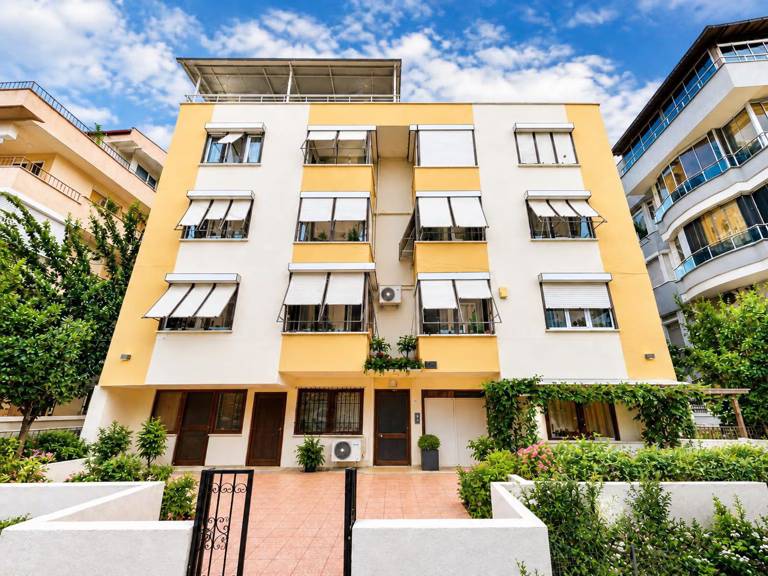
When did the Turkish Building Earthquake Code take effect, how is a risky building determined, how does it show in the title deed? A building-safety checklist.
When buying a home, the hardest thing to assess is the building's condition with respect to earthquakes. It is not possible to tell by eye whether a building is safe; but knowing which documents to look at and which official processes exist helps you ask the right questions. This guide has been prepared on the basis of the Turkish Building Earthquake Code and Law No. 6306.
The Turkish Building Earthquake Code (TBDY 2018)
The Turkish Building Earthquake Code was published by the Disaster and Emergency Management Presidency (AFAD) in the Official Gazette dated 18 March 2018 (Repeated, No. 30364) and entered into force on 1 January 2019. The purpose of the regulation is to set the rules and minimum conditions for the design and construction of buildings to be newly built, altered and enlarged under earthquake effects, and for the performance assessment and strengthening of existing buildings. With the regulation that entered into force on the same date, the 2007 “Regulation on Buildings to Be Built in Earthquake Zones” was repealed.
In practice, the rules under which a building was designed depend on the date of its permit and project. For this reason, the construction permit date and approved project of the building you will buy are the starting point of the assessment. However, the date alone is not a guarantee of safety; whether the building was built in conformity with its project and the changes made later are also decisive.
What is a risky building?
Under Law No. 6306, a risky building is one, located inside or outside a risk area, that has completed its economic life or that is determined, based on scientific and technical data, to carry the risk of collapse or serious damage.
How is risky building detection carried out?
- Application: Under Article 3 of the law, the determination is made first of all by the building owners or their legal representatives, at their own expense, through institutions and organizations licensed by the Urban Transformation Directorate.
- Ex officio determination: The Directorate or the administration may carry out the determination itself or may request it from the owners by giving a period; if the owners do not have it done, the determination is made or commissioned by the administration.
- Notification: The risky building is notified to the land registry office, within ten working days at the latest from the date of determination, to be entered in the annotations section of the title deed register. The record is posted on the building, owners are notified via e-Devlet and it is announced at the muhtar's office (neighborhood headman) for fifteen days.
- Objection: Owners or their legal representatives may object to the determination within fifteen days. Objections are decided by technical boards made up of university faculty members and Ministry/Directorate officials.
The law also provides that, if the determination is obstructed, at the administration's request and with the written permission of the civil administrative authority, closed areas may be opened with police support and an ex officio determination made. In other words, the determination process in a building can proceed even if one of the owners objects.
What does this record mean when buying?
An apartment with a risky building record in the annotations section of the title deed means that the building has entered a transformation process. Before buying, the following questions should be answered: Was the determination objected to? Has a decision been taken among the owners? What is the demolition and rebuilding schedule? What will your land share give you in the new building?
There is also a detail on the financing side: under BDDK (Banking Regulation and Supervision Agency) Decision No. 10849, if the only home owned by the consumer, their spouse or children under 18 has been demolished, or a demolition decision has been taken on it, because a risky building was determined under Law No. 6306, it is not taken into account in the home ownership assessment used for setting home loan ratios.
Preliminary checks that can be made with documents
- Construction permit and approved project: The permit date and the conformity of the number of floors in the project with the current state.
- Building use permit: The permit rests on the determination that the building conforms to its permit and annexes and that there is no technical objection to its use (Zoning Law Art. 30).
- Title deed annotations: Zoning violation and risky building records.
- Changes made later: Alterations such as removing walls on the ground floor, adding floors, or interfering with columns or beams.
- Building management records: Whether an application for risky building detection was made earlier.
Warning signs that can be noticed by observation
Observation does not replace an engineering assessment; but the following situations may point to the need to have an expert inspect: pronounced cracks in load-bearing elements, rusted concrete surfaces where reinforcement has become visible, constant damp or standing water in the basement, and removed walls and columns in ground-floor shops.
Checklist
- Ask the municipality for the construction permit date and the approved project.
- Find out whether there is a building use permit.
- Read the annotations section of the title deed.
- Ask the building management for any renovations carried out and any technical reports.
- If in doubt, consider having a licensed organization carry out an inspection with the owners' permission.
Aktif Emlak can help you compile the permit, occupancy and title deed documents of a building you are examining in the Edremit Gulf; for a structural assessment, you need to apply to the relevant engineering organizations.
Sources
- Official Gazette – Turkish Building Earthquake Code, 18.03.2018
- Legislation Information System – Law No. 6306 on the Transformation of Areas Under Disaster Risk
- Legislation Information System – Zoning Law No. 3194
- BDDK (Banking Regulation and Supervision Agency) – Board Decision No. 10849 dated 15.02.2024